

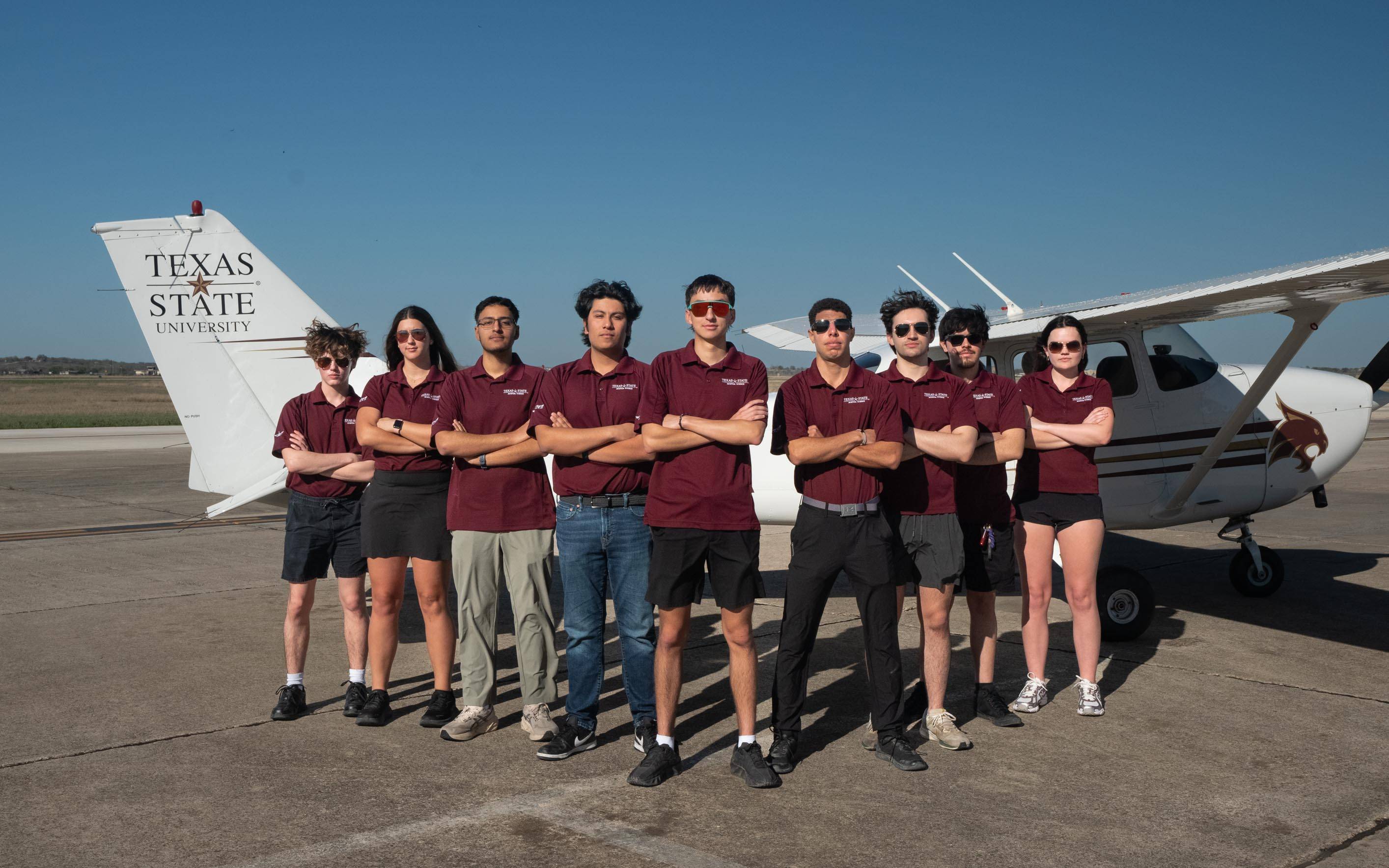
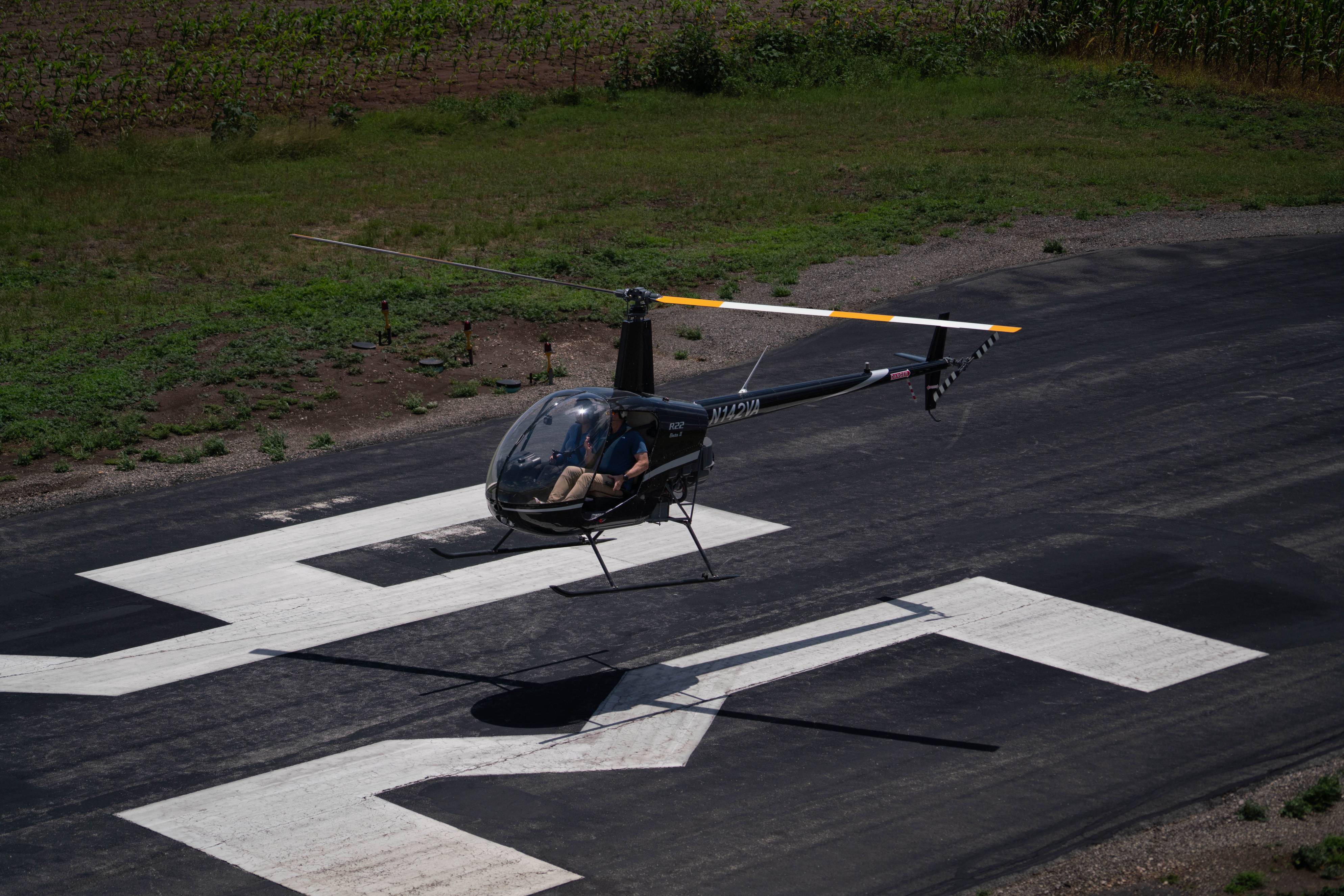
Rotor-Wing Aviation Science (B.A.A.S.)
Earn a Texas State University bachelor’s degree while you train for FAA helicopter certificates: Private Pilot, Instrument, Commercial Pilot, and Flight Instructor. You’ll fly at FAA Part 141 partner schools in Seguin, Texas or Prescott, Arizona.
One-on-one
Classroom to Cockpit.
University coursework connects to one-on-one flight instruction, ground school, and training in hover control, low-altitude navigation, and confined-area operations.
Built for Helicopter Careers.
Built for Helicopter Careers.
Choose the rotor-wing platform for careers in emergency medical services, law enforcement, utility work, and flight instruction.
Flexible Academic Modalities Meet Onsite Flight Training
Your coursework and flight training move forward together. Academic courses are on campus or 100% online depending on your partner location; flight training always takes place in person.
| Delivery format | Where it applies | Student support |
|---|---|---|
| On campus, TXST San Marcos | Veracity Aviation, Seguin, TX | Main-campus advising, tutoring, and campus life |
| 100% online, Accelerated Online Program (AOP) | Veracity Aviation, Seguin, TX; Guidance Helicopters, Prescott, AZ | Virtual academic advising (degree audits, course sequencing); online tutoring and writing support in Canvas |
Veracity Aviation
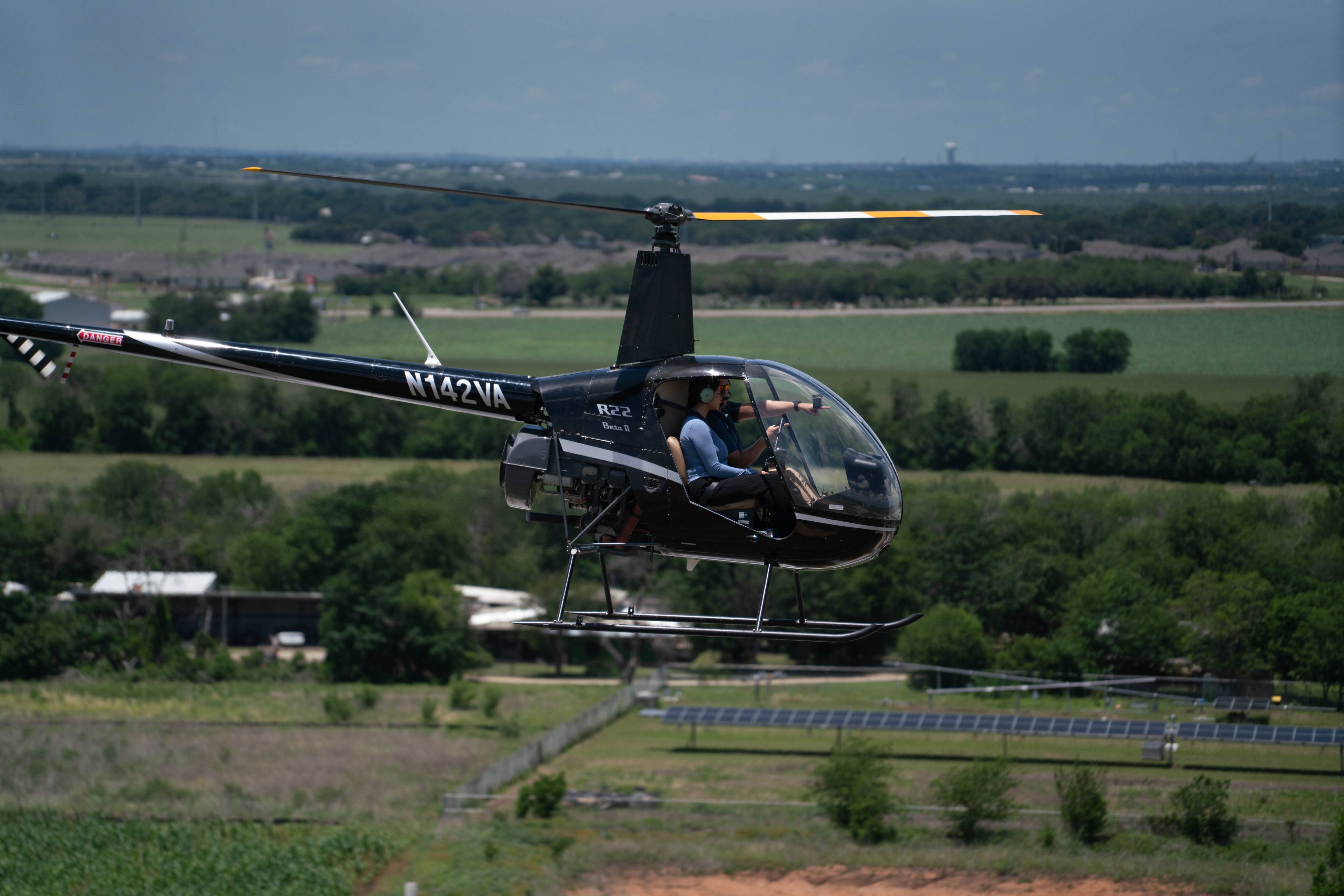
Veracity Aviation (Seguin, TX)
20 years of rotorcraft training; pairs with on-campus coursework at TXST San Marcos (about a 30-minute drive) or 100% online coursework.
Guidance Helicopters
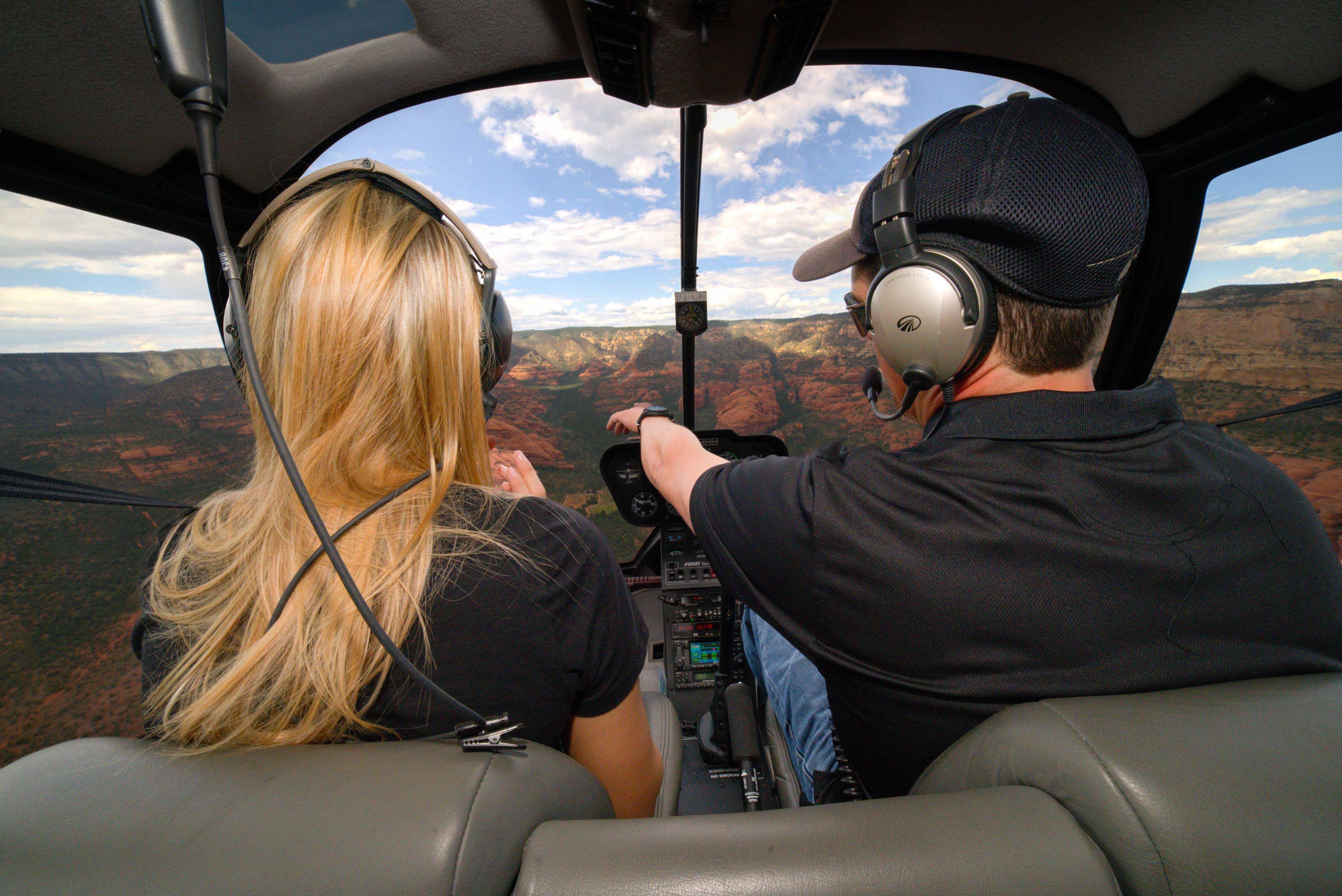
Guidance Helicopters (Prescott, AZ)
founded 1998; trains at Prescott Regional Airport; pairs with 100% online coursework.
Find the Right Location for Your Helicopter Training
Compare each rotor-wing partner's fleet, academic format, and estimated costs.
Train on Modern Rotorcraft
Train on industry-standard helicopters and build the precision skills that define professional helicopter pilots.
Robinson R44
Primary Trainer
Piston training helicopters such as the Robinson R44, one of the most widely used training and utility helicopters.
Hover and Autorotation
Hover and Precisions Skills
Hover control, autorotations, and confined-area and low-altitude operations.
Aircraft and Training Devices
Instrument Training
Instrument flight rules for rotary wing, in the aircraft and in training devices.
Teach to Build Hours
Instructor Training
Rotorcraft CFI and CFII training, the most common first job for new helicopter pilots.
See the Fleet in Person
Tour a partner flight school, see the aircraft up close, and meet the instructors who will guide your training. Our aviation advisors can help you plan a visit.
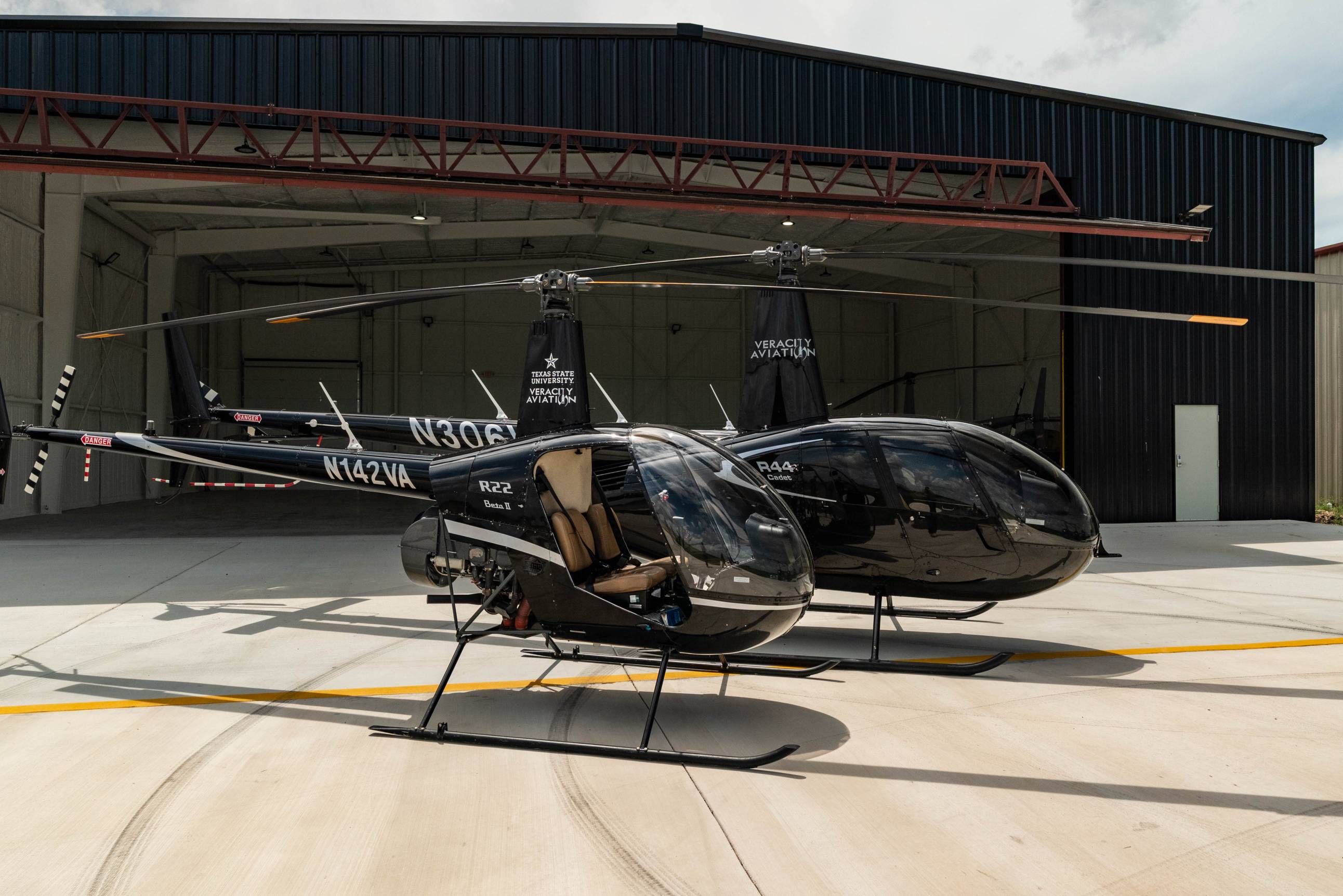
Aircraft models and avionics vary by flight partner location. Confirm exact fleet details with your chosen partner before enrolling.
Clear Investments for a Professional Future
Flight training costs depend on where you train. Choose a partner location to see its estimated flight hours and fees, then use the overview below to understand how tuition and flight training are paid.
Your Costs Start With Your Location
Estimated rotor-wing flight training costs at TXST partners range from about $111,600 (Seguin) to about $153,500 (Prescott) for all six flight courses, based on partner fee schedules through Spring 2027. TXST tuition and fees are separate.
| Partner | Modality & location | Est. flight cost, 6 courses | View costs |
|---|---|---|---|
| Veracity Aviation | Fly in Seguin, TX with on-campus courses at TXST San Marcos or 100% online courses | $111,607 | View Seguin Costs & Hours |
| Guidance Helicopters | Fly in Prescott, AZ with 100% online courses | $153,516 | View Prescott Costs & Hours |
Two Parts of Your Investment
| Cost Category | What It Covers | Paid To |
|---|---|---|
| Texas State Academic Tuition & Fees | B.A.A.S. degree coursework; standard tuition and fees based on enrollment status, residency, and delivery format (AOP or on campus) | Texas State University |
| FAA Part 141 Flight Training | Aircraft rental, dual and solo instructor time, simulator sessions, ground school, and training materials | Your flight partner school |
What Each Location's Estimate Includes
Every rotor-wing fee page breaks training into the same six courses:
- Private Rotary Wing Aircraft Operations (Private Pilot, helicopter)
- Instrument Flight Rules for Rotary Wing (Instrument Rating)
- Theory of Commercial Rotary Wing Flight I
- Theory of Commercial Rotary Wing Flight II (Commercial Pilot)
- Principles and Methods of Rotary Wing Flight Instruction (CFI)
- Principles and Methods of Rotary Wing Flight Instruction II (CFII)
Note: estimates include an R44 option, which partners describe as an employment benefit.
Have Questions About Financing Your Degree?
Our aviation advisors can walk you and your family through tuition, flight training costs, and financial aid options so you can plan with confidence.
Frequently Asked Questions
Rotor-wing Aviation Science FAQs
-
How do I become a helicopter pilot with a college degree?
At Texas State, you earn a B.A.A.S. in Aviation Science while completing FAA Part 141 helicopter training at a TXST partner school. You progress from Private Pilot to Instrument Rating, Commercial Pilot, and Certified Flight Instructor (CFI/CFII).
-
Do I need flight experience before applying?
No. The rotor-wing pathway starts with the Private Pilot certificate, so you can begin with no prior flight time.
-
Can I earn a helicopter pilot degree online?
Yes. Both partners offer 100% online TXST coursework through the Accelerated Online Program: Veracity Aviation in Seguin, Texas and Guidance Helicopters in Prescott, Arizona. Seguin students can also take courses on the TXST San Marcos campus. Flight training is always in person.
-
What helicopter certificates can I earn?
The rotor-wing pathway trains toward the FAA Private Pilot certificate (helicopter), Instrument Rating, Commercial Pilot certificate, and Certified Flight Instructor (CFI and CFII) ratings.
-
How much does helicopter flight training cost?
Estimated flight training for all six rotor-wing courses is about $111,600 at Veracity Aviation (Seguin) and about $153,500 at Guidance Helicopters (Prescott), per fee schedules through Spring 2027. TXST tuition and fees are billed separately.
-
Is there a weight limit for helicopter training?
Yes. Training helicopters have maximum seat and total weight limits, so confirm the limits for your partner's aircraft before enrolling.
-
Do I need a medical certificate?
Yes. TXST requires an FAA first-class medical certificate before you register for flight courses. Schedule your exam with an FAA Aviation Medical Examiner early to confirm eligibility.
-
What jobs can helicopter pilots pursue?
Helicopter pilots work in emergency medical services, law enforcement, offshore energy, agriculture, utility and power-line work, aerial firefighting, tours, and corporate aviation. Many start as flight instructors to build hours.
-
What is FAA Part 141 training?
Part 141 schools follow FAA-approved training courses with structured syllabi and stage checks, giving you a consistent, organized training environment.
-
Should I choose fixed-wing or rotor-wing?
Choose rotor-wing if you want to fly helicopters in fields like EMS, law enforcement, or utility work. Choose fixed-wing for airplane careers such as corporate aviation, charter, and flight instruction. An aviation advisor can help you decide.
Ready to Start Your Rotor-Wing Pathway?
- Choose your helicopter partner. Compare Seguin and Prescott for academic format, fleet, and costs.
- Get your FAA medical certificate. Schedule an exam with an FAA Aviation Medical Examiner, and confirm the partner's aircraft weight limits.
- Apply to Texas State. Submit your B.A.A.S. in Aviation Science application.
- Connect with Aviation Advising. Map your degree plan and coordinate your flight training start.
Your Degree and Your Wings Start Here
Earn a Texas State degree while you train toward Private, Instrument, Commercial, and CFI credentials. Apply today, or connect with an aviation advisor to choose your flight partner and plan your path.