

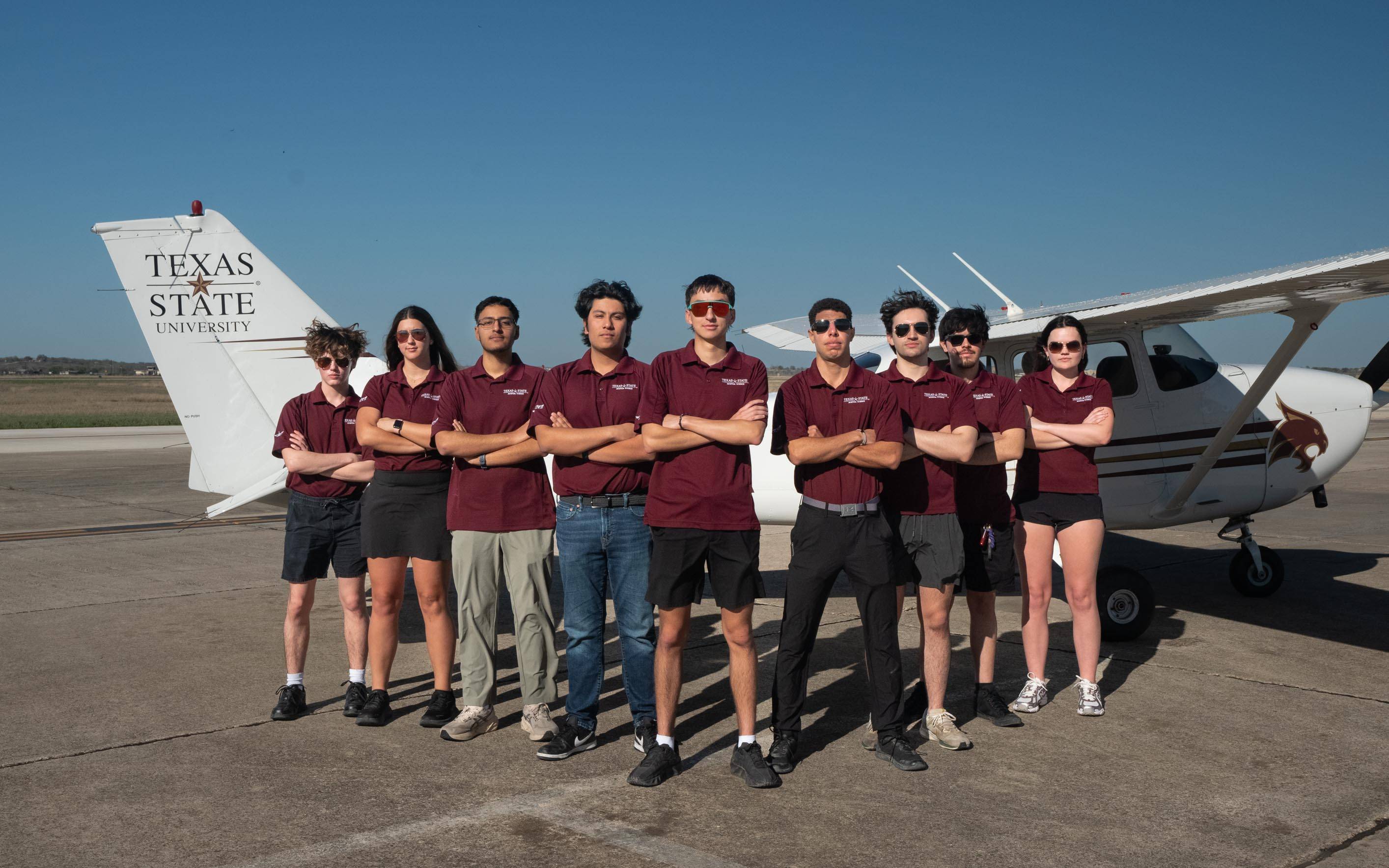
Fixed-Wing Aviation Science (B.A.A.S.)
Earn a Texas State University bachelor's degree while you train toward your Private Pilot, Instrument, Commercial, and Certified Flight Instructor credentials at FAA Part 141 partner flight schools.
Degree + Wings
A Degree + Flight Credentials, Together.
Graduate with a Bachelor of Applied Arts and Sciences in Aviation Science and the flight qualifications to compete for professional pilot opportunities and build long-term career flexibility.
One-on-one
Classroom to Cockpit.
University coursework connects directly to one-on-one flight instruction, ground school, and simulator training with certified partners, so what you study shows up on the flight line.
TXST Degrees, TXST Opportunities
Built for Fixed-Wing Careers.
Choose the fixed-wing platform that prepares you for commercial, corporate, and flight instruction roles, rather than a one-size-fits-all program.
Flexible Academic Modalities Meet Onsite Flight Training
Your Texas State coursework and your time on the flight line move forward together. Academic courses are delivered online or on campus depending on your flight partner location, while flight training always takes place in person at an FAA Part 141-certified partner school.
| Delivery Format | Where It Applies | Student Support |
|---|---|---|
| 100% online, Accelerated Online Program (AOP) | Select partner locations across Texas and the U.S. | Virtual academic advising (degree audits, course sequencing), online tutoring and writing support embedded in Canvas |
| On campus, TXST San Marcos | San Marcos partner location: Coast Flight Training (KHYI) | Main-campus advising, tutoring, and campus life |
| On campus, TXST Round Rock | Round Rock partner location: Genesis Aero (KGTU) | Round Rock Campus advising, tutoring, and student services |
Find the Right Location for Your
Train close to home or where you want to build your career. Compare partner locations to see each school’s fleet, academic format, and estimated costs.
Train on Modern Fleets and Advanced Avionics
Train in industry-standard aircraft that bridge the gap between your first lesson and a professional cockpit. At our FAA Part 141 partners, you’ll build hands-on glass-cockpit experience and the technical confidence aviation careers demand.
Primary Trainer
Primary Trainer
Proven platforms such as the Cessna 172 Skyhawk, one of the most widely used aircraft for primary and commercial flight training.
Advanced Avionics
Advanced Avionics
Garmin G1000 NXi glass cockpits at select partners. Learn digital flight displays, flight management, and situational awareness tools used in corporate and commercial flight decks.
Multi-Engine
Multi-Engine Platforms
Multi-engine aircraft for commercial multi-engine and instructor training.
Simulator Training
Simulator Training
Flight training devices for instrument procedures, emergency scenarios, and cost-efficient practice.
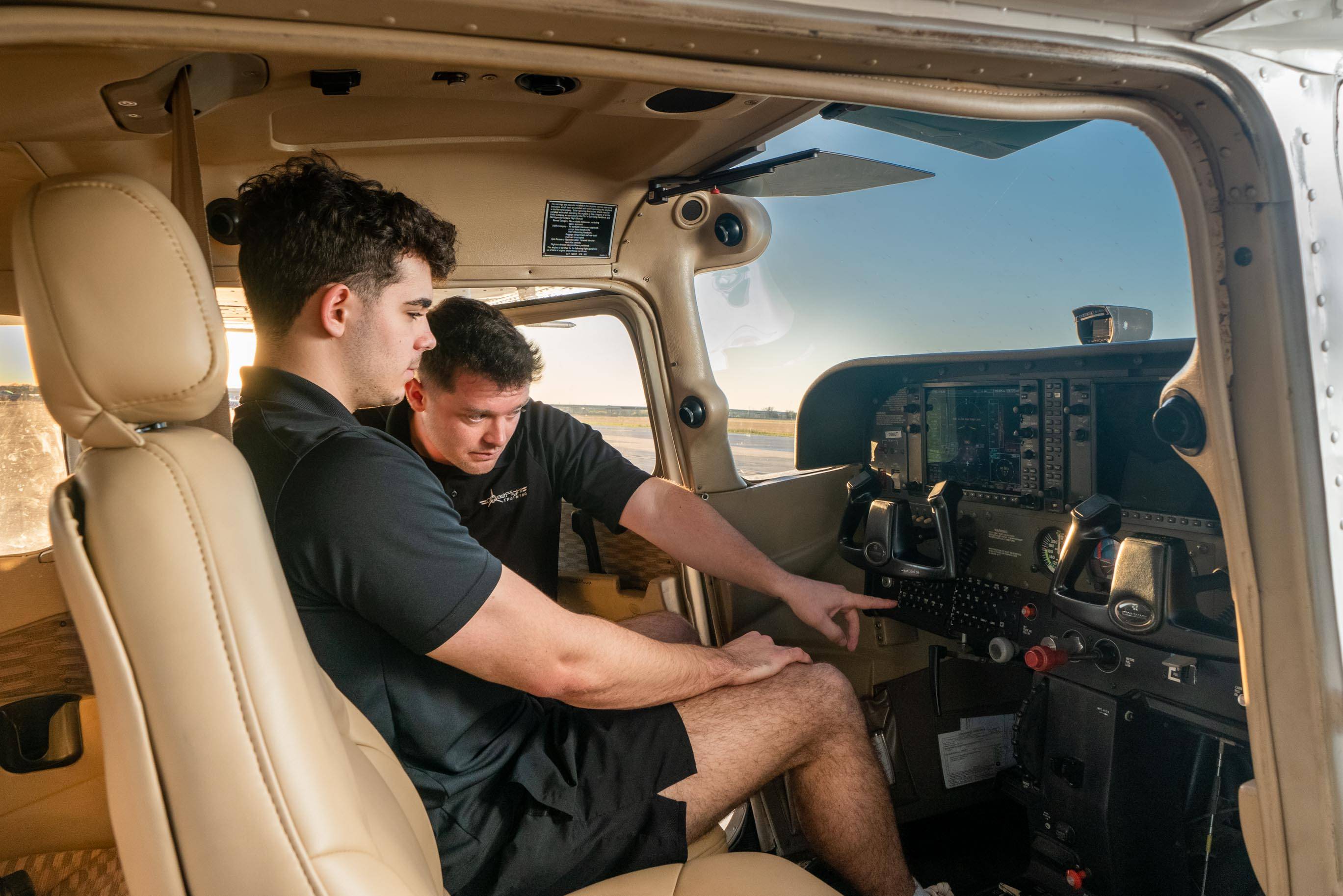
Aircraft models, configurations, and avionics packages vary by flight partner location. Confirm exact fleet details with your chosen partner before enrolling.
See the Fleet in Person
Tour a partner flight school, see the aircraft up close, and meet the instructors who will guide your training. Our aviation advisors can help you plan a visit.
Clear Investments for a Professional Future
Flight training costs depend on where you train. Choose a partner location to see its estimated flight hours and fees, then use the overview below to understand how tuition and flight training are paid.
Your Costs Start With Your Location
Flight training costs depend on where you train. Choose a partner location to see its estimated flight hours and fees, then use the overview below to understand how tuition and flight training are paid.
| Partner | Modality & Location | View Costs |
|---|---|---|
| San Marcos, TX (Coast Flight Training) | Fly at KHYI with on-campus courses at TXST San Marcos. | View San Marcos Costs & Hours |
| Georgetown, TX (Genesis Aero) | Fly with Genesis Aero with on-campus courses at TXST Round Rock. | View Georgetown Costs & Hours |
| Online (AOP) Partner Locations | Train at partners across Texas and the U.S. with 100% online courses. | View All AOP Flight Partners |
Two Parts of Your Investment
| Cost Category | What It Covers | Paid To |
|---|---|---|
| Texas State Academic Tuition & Fees | B.A.A.S. degree coursework; standard tuition and fees based on enrollment status, residency, and delivery format (AOP or on campus) | Texas State University |
| FAA Part 141 Flight Training | Aircraft rental, dual and solo instructor time, simulator sessions, ground school, and training materials | Your flight partner school |
What Each Location's Estimate Includes
Every location page breaks flight training into the same modules, so families can compare locations side by side:
• Private Pilot Certificate
• Instrument Rating
• Commercial Pilot Certificate (Single/Multi-Engine)
• Certified Flight Instructor (CFI/CFII)
Have Questions About Financing Your Degree?
Our aviation advisors can walk you and your family through tuition, flight training costs, and financial aid options so you can plan with confidence.
Frequently Asked Questions
Fixed-Wing Aviation Science FAQs
-
Do I need flight experience before applying?
No. The pathway starts with the Private Pilot Certificate, so students can begin with no prior flight time. Current flight students may also apply to complete a degree alongside their training.
-
Is the degree online or in person?
It depends on your flight partner location. Select locations pair flight training with TXST's 100% online Accelerated Online Program; the San Marcos and Georgetown locations pair it with on-campus courses at TXST San Marcos or TXST Round Rock. Flight training is always in person.
-
What certificates can I earn?
The fixed-wing pathway trains toward the Private Pilot Certificate, Instrument Rating, Commercial Pilot Certificate (single- and multi-engine), and Certified Flight Instructor (CFI and CFII).
-
Are flight training costs included in tuition?
No. TXST tuition and fees cover your degree coursework. Flight training is billed separately by your partner flight school.
-
What is FAA Part 141 training?
Part 141 schools follow FAA-approved training courses with structured syllabi and stage checks, providing a consistent, organized training environment.
-
Do I need a medical certificate?
Yes. Student pilots need an FAA medical certificate before flying solo. Students planning professional careers often obtain a first-class medical early to confirm eligibility.
-
Can I train outside Texas?
Yes. TXST partners with flight schools in Texas and across the United States.
Ready to Start Your Fixed-Wing Pathway?
Four steps take you from interested to on the flight line.
Next Steps Checklist:
1. Choose your flight partner location. Compare locations to confirm fleet, academic format, and costs (Compare Locations).
2. Get your FAA medical certificate. Schedule an exam with an FAA Aviation Medical Examiner (Read our FAA Medical Certificate Guide).
3. Apply to Texas State. Submit your B.A.A.S. in Aviation Science application.
4. Connect with Aviation Advising. Map your degree plan and coordinate flight training start with your partner school.
Your Degree and Your Wings Start Here
Earn a Texas State degree while you train toward Private, Instrument, Commercial, and CFI credentials. Apply today, or connect with an aviation advisor to choose your flight partner and plan your path.